
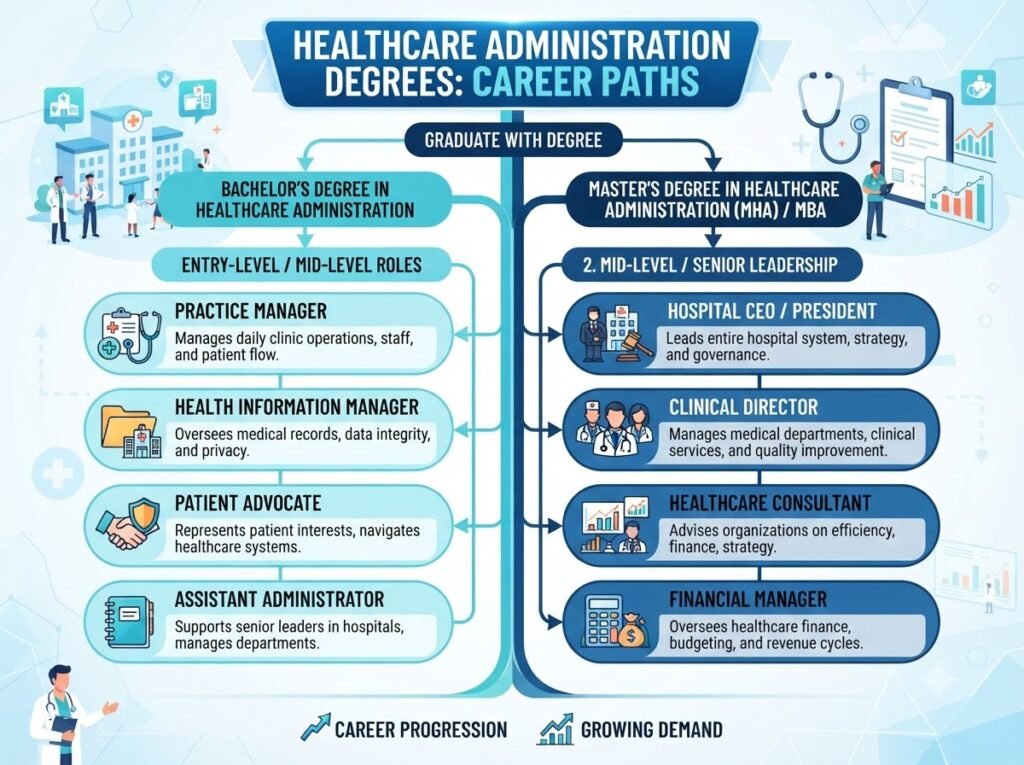
Introduction to Healthcare Administration Degrees
Healthcare administration degrees play a crucial role in the evolving landscape of the healthcare sector. These programs are designed to equip students with the essential knowledge and skills required to excel in various administrative roles within healthcare organizations. As the demand for efficient healthcare delivery continues to rise, individuals holding degrees in healthcare administration are increasingly sought after for their expertise in managing complex systems and processes.
The fundamental principles of healthcare management include a thorough understanding of healthcare policies, organizational behavior, financial management, and healthcare law. An effective healthcare administrator must navigate these principles to improve health services and ensure quality care for patients. By integrating both management principles and healthcare delivery systems, these degrees prepare students to address the unique challenges faced in healthcare settings.
Healthcare administration degree programs also emphasize leadership skills, critical for guiding teams and making strategic decisions in healthcare facilities. Students learn how to effectively communicate with multidisciplinary teams, manage human resources, and foster a culture of safety and compliance. Moreover, practical experience through internships or capstone projects is an essential component of many programs, enabling students to apply theoretical knowledge in real-world situations.
In addition, as the healthcare landscape continues to evolve with technological advancements and regulatory changes, healthcare administration degrees are adapting to meet new demands. Courses on data analytics, telehealth management, and emerging healthcare technologies are becoming increasingly prevalent, providing graduates with a competitive edge in their careers. Overall, these programs are integral to cultivating skilled professionals who can lead and innovate in the fast-paced world of healthcare.
Types of Healthcare Administration Degrees Available
Healthcare administration degrees can be categorized into several types, each serving different educational and professional objectives. Understanding the distinctions between these degrees is essential for prospective students aiming to enter the healthcare field.
The associate degree in healthcare administration typically requires two years of study. This degree focuses on foundational principles of healthcare management and administration. It prepares graduates for entry-level positions, such as healthcare administrative assistants or clerks, providing essential skills in communication, basic healthcare laws, and administrative practices.
Next, the bachelor’s degree in healthcare administration usually spans four years. This comprehensive program covers a broader range of subjects, including healthcare policy, finance, human resources, and ethics in healthcare. Graduates with a bachelor’s degree can pursue roles such as health services manager, medical and health services manager, and clinic manager. The bachelor’s degree serves as a crucial stepping stone towards higher-level positions in the field.
For those seeking to advance their careers further, a master’s degree in healthcare administration (MHA or MBA with a healthcare focus) offers an in-depth exploration of complex healthcare systems and leadership strategies. Typically requiring an additional two years of study beyond the bachelor’s, this degree prepares individuals for top-level management and executive roles. Common career outcomes include positions such as director of operations in hospitals, executive medical director, and hospital administrator.
Lastly, the doctoral degree in healthcare administration, which may include a Doctor of Healthcare Administration (DHA) or a PhD in Healthcare Services, is designed for those aiming for the highest levels of leadership and academic roles within the field. This degree requires extensive research and can take three to five years to complete. Graduates often find opportunities in academia, such as university faculty, or in upper-executive roles within healthcare organizations.
In conclusion, each type of healthcare administration degree offers unique advantages and career pathways. Understanding these degrees’ focus, duration, and potential outcomes is essential for anyone considering a career in this dynamic industry.
Career Opportunities in Healthcare Administration
Graduates of healthcare administration programs are well-prepared to enter a variety of career paths within the healthcare sector. One prominent role is that of a hospital administrator, who is responsible for overseeing the daily operations of a hospital or healthcare facility. This position requires strong leadership skills, managerial acumen, and a thorough understanding of healthcare policies and regulations. The salary for hospital administrators can vary widely based on the facility’s size and location, but it generally ranges from $90,000 to over $150,000 annually.
Another significant career opportunity is in health services management. Health services managers focus on improving the efficiency and quality of healthcare services, often working closely with medical staff to develop policies and implement strategic initiatives. Those in this role may also handle budgeting and resource allocation. The projected growth for health services management positions is robust, with salaries typically ranging from $80,000 to $130,000, reflecting the demand for effective leadership in healthcare organizations.
Additionally, policy analysts play a crucial role in shaping healthcare systems through research and evaluation of policies affecting public health. They analyze data to recommend changes and improvements within healthcare frameworks. Policy analysts often find employment with governmental agencies, think tanks, or non-profits. Their salaries can vary, typically falling within the range of $60,000 to $100,000, depending on experience and the specific sector in which they work.
The diverse array of roles available to healthcare administration graduates is a testament to the importance of skilled professionals in enhancing the efficiency and effectiveness of health systems. With the right education and training, graduates can embark on rewarding careers that contribute significantly to the health and well-being of communities.
Choosing the Right Healthcare Administration Program
When considering a degree in healthcare administration, selecting the right program is crucial for future success in this dynamic field. There are several factors prospective students must evaluate to ensure they make an informed choice.
First and foremost, accreditation is one of the most important criteria. Programs accredited by recognized agencies assure students that they will receive a quality education meeting industry standards. Attending an accredited program not only validates the degree but also enhances employment opportunities post-graduation. Therefore, checking for accreditation status should be a priority for any aspiring healthcare administrator.
In addition to accreditation, the curriculum offered by the program plays a vital role in shaping the educational experience. Students should look for programs that provide a comprehensive curriculum covering essential topics such as healthcare policy, management principles, finance, and ethics. Furthermore, courses that incorporate practical case studies and real-world applications can greatly enhance learning outcomes.
Another significant decision is whether to pursue an online or on-campus program. Online programs offer greater flexibility, which can be beneficial for working professionals or those with other commitments. However, on-campus programs might provide better networking opportunities and access to hands-on experiences. Assessing personal learning preferences and scheduling constraints is essential in making this decision.
Internships or practical experience opportunities are also critical components of a healthcare administration program. Engaging in internships allows students to apply classroom theories to real-world situations, bridging the gap between academic knowledge and practical skills. Programs that emphasize partnering with local healthcare organizations for internships can provide valuable insights and professional connections that benefit career advancement.
In summary, prospective students should carefully consider accreditation, curriculum depth, format options, and internship opportunities when selecting a healthcare administration program. By taking these elements into account, students can better position themselves for a successful career in healthcare administration.