
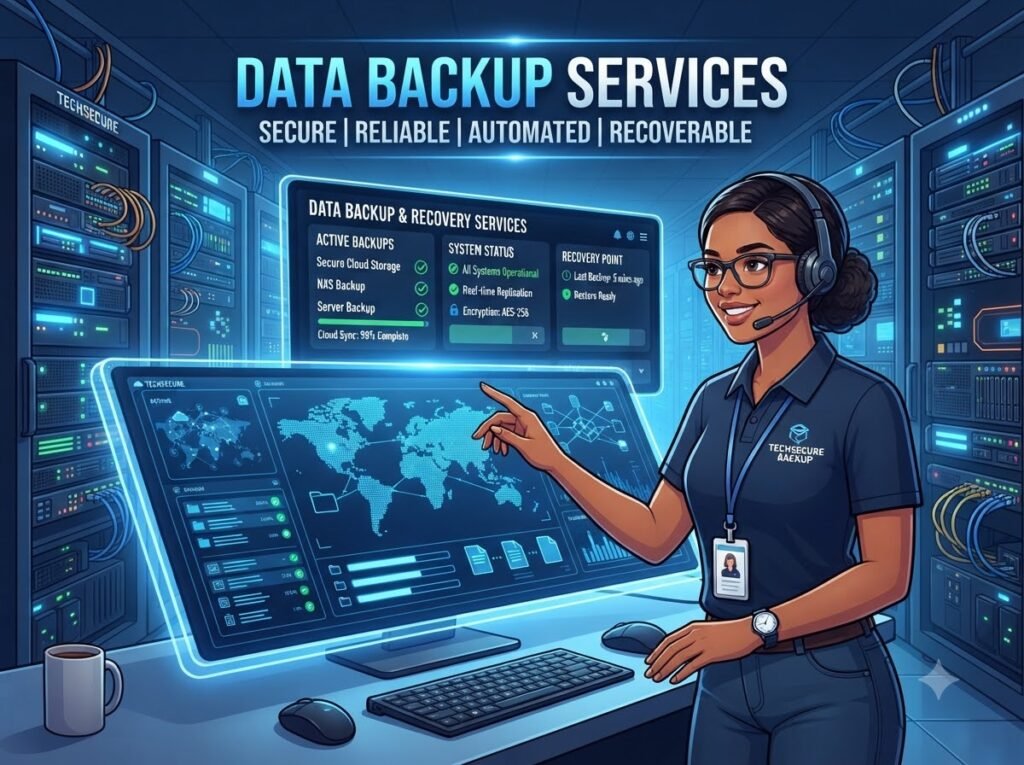
Introduction to Data Backup Services
In an increasingly digital business landscape, the importance of data backup services cannot be overstated. These services are essential in ensuring that critical business data is securely stored and readily available in the event of loss or corruption. Data backup refers to the process of copying and archiving files and databases to protect information against unexpected events such as system failures, cyberattacks, or natural disasters.
Businesses generate and manage vast amounts of data, ranging from customer records and sales transactions to proprietary software and operational documentation. Each of these data types is valuable and often irreplaceable; losing access to them can lead to significant operational disruptions and financial losses. Therefore, understanding the different categories of data that require protection is crucial for any organization.
While the potential risks of inadequate data protection measures are numerous, they can generally be categorized into a few major concerns. Firstly, without proper backup services, businesses may face data loss due to hardware malfunctions or accidental deletions. Secondly, the threat of cyberattacks, such as ransomware, highlights the need for robust backup solutions. In such situations, attackers may compromise data access, with unbearable consequences for organizations lacking an effective backup strategy. Additionally, disasters—natural or human-induced—can render data inaccessible, emphasizing the urgency of regular and systematic data backups.
The digital landscape is constantly evolving, and with it, the necessity for businesses to prioritize data backup solutions is becoming increasingly apparent. Regular backups not only safeguard against data loss but also facilitate smooth recovery processes in times of crisis. Organizations that implement comprehensive backup strategies are not only protecting their data but are also fortifying their overall resilience in the face of unforeseen disruptions.
Types of Data Backup Solutions Available
In the digital age, protecting business data is paramount, and choosing the right data backup solution is a crucial decision that can significantly affect operations. Various options exist, each possessing distinct characteristics that can meet the varied needs of businesses.
One prominent option is cloud-based backup solutions. These services allow organizations to store data off-site on remote servers, leaving the management of the infrastructure to the service provider. The advantages of cloud backups include scalability, as businesses can easily adjust storage capacity based on their requirements, and cost-effectiveness, particularly for smaller enterprises. However, potential drawbacks comprise reliance on internet connectivity and concerns around data security and privacy.
On-premises backups represent another approach, where businesses maintain their own physical equipment for data storage. This solution offers users complete control over their data and can facilitate faster recovery times since data is stored locally. Nevertheless, the costs associated with hardware purchases, maintenance, and the need for dedicated IT staff can be prohibitive, especially for growing organizations.
Hybrid backup solutions combine elements of both cloud and on-premises systems, allowing businesses to store sensitive data locally while leveraging the cloud for additional storage and redundancy. This flexibility can enhance security and operational efficiency, although managing both environments might introduce complexities and require more robust planning.
Real-world examples illustrate the efficacy of these backup solutions. A manufacturing company may opt for a hybrid system to secure proprietary designs while ensuring compliance with data regulations, while a startup with limited resources might choose a cloud-based option to minimize initial capital outlay.
Ultimately, the type of backup solution a business selects will depend on its unique requirements, resources, and risk tolerance, making careful consideration essential to ensure robust data protection.
Key Considerations When Choosing a Backup Service
When evaluating data backup services, businesses must prioritize several critical factors to ensure that their data protection meets organizational needs. The first element to consider is storage capacity. Companies should assess the volume of data they generate and determine the appropriate storage requirements. Scalable solutions are often more desirable, allowing for adjustments as data needs grow.
Recovery time objectives (RTO) signify how quickly a business can resume operations after a data loss incident. Organizations should define acceptable downtime and look for backup services that can meet those RTO requirements. Similarly, recovery point objectives (RPO) refer to the maximum acceptable amount of data loss measured in time. Selecting a service that can minimize RPO is essential for maintaining business continuity, particularly for operations with high data turnover.
Another critical aspect is data encryption. With the rise in cyber threats, ensuring that sensitive information is adequately protected during transmission and storage is paramount. Businesses should choose backup providers that offer strong encryption standards to safeguard their data against unauthorized access.
Compliance with regulations is also crucial, especially for businesses in regulated industries that must adhere to specific data protection laws. Ensure that potential backup service providers offer solutions that align with these compliance frameworks.
Furthermore, customer support is a significant factor to consider. Reliable technical support ensures quick resolution of issues, which can minimize downtime. Organizations should evaluate the support options available, including availability of live support and the nature of support channels offered.
To conduct a thorough assessment, businesses can create a checklist of these factors and rate potential providers based on how well they meet each criterion. This systematic approach will help in making an informed decision regarding the most suitable backup service for their needs.
Evaluating Recovery Options: What to Look For
When selecting a data backup service, it is crucial to thoroughly evaluate the recovery options it offers. The effectiveness of these options can significantly impact a business’s ability to maintain continuity in the event of data loss. Several factors should be considered, starting with the speed of recovery. Businesses should assess how quickly they can fully restore their data after a loss. This is often measured by recovery time objectives (RTO), which indicate the maximum permissible downtime for various business functions.
Ease of use is another critical consideration. A good recovery solution should facilitate smooth management of the restoration process. Backup services should provide user-friendly interfaces and straightforward procedures that enable staff, regardless of technical skill levels, to perform data recovery efficiently. Moreover, it is advantageous to investigate whether the service offers automated recovery options, as these can significantly reduce recovery times and simplify the process.
Furthermore, the capability to support various data types and environments is essential. Businesses often utilize a range of platforms and data formats, from databases to cloud storage solutions. It is vital to ensure that the selected backup service can adequately cater to these needs, covering all potential data sources. Additionally, verifying the service’s compatibility with different environments—such as on-premises systems versus cloud architectures—helps in ensuring a comprehensive data recovery strategy.
Lastly, examine the level of support provided by the backup service. Strong technical support can be invaluable during a data loss incident. Availability of 24/7 support, accessibility to experienced professionals, and resources like detailed documentation can all contribute to a smoother recovery process. By considering these factors—speed, ease of use, data type support, and customer service—businesses can make a more informed choice regarding backup solutions, tailoring them to their unique recovery needs and business continuity plans.