Understanding Business Loan Programs
Business loan programs serve as pivotal financial resources for small companies seeking to establish or expand their operations. These funds are designed to facilitate various business activities, including purchasing inventory, financing product development, managing cash flow, or even acquiring new assets such as equipment or real estate. By providing access to capital, these loan programs play a crucial role in the economic growth and sustainability of small businesses.
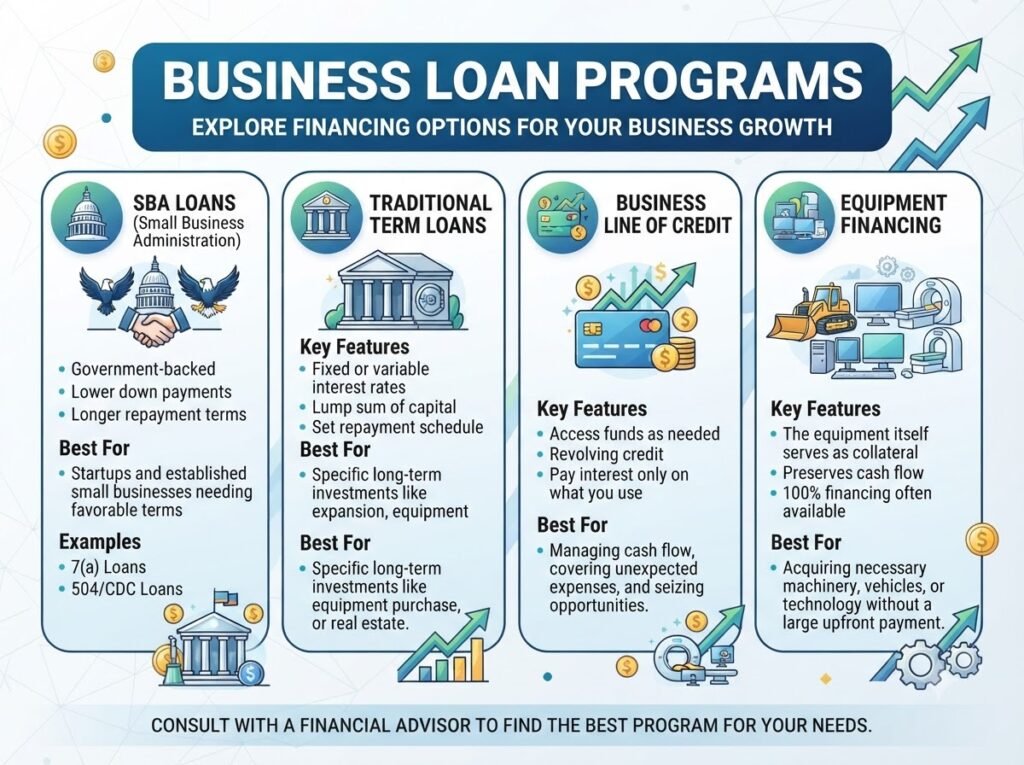
There are several types of business loans available, each tailored to meet specific needs and circumstances. Common options include traditional bank loans, Small Business Administration (SBA) loans, personal loans for business purposes, lines of credit, and alternative financing options such as peer-to-peer lending or invoice financing. Each type of loan comes with its own set of terms and conditions, interest rates, and repayment schedules, making it essential for business owners to thoroughly research and evaluate their options before committing to a funding source.
Eligibility for these loans often depends on various factors such as business credit history, revenue, time in operation, and the purpose of the loan. Typically, lenders assess these factors to determine the risk associated with lending to a specific business. Securing funding through business loan programs can provide numerous benefits, including improved cash flow, the ability to scale operations, and increased purchasing power. This financial support can enable small enterprises not only to survive but to thrive in a competitive marketplace.
Types of Business Loans
When small companies seek financing, understanding the diverse types of business loans available is crucial. The options range from traditional bank loans to alternative financing solutions, each with distinctive characteristics suitable for different business needs.
Traditional bank loans are often the first choice for small business owners. These loans typically offer a lower interest rate due to the banks’ established practices and relationships. However, they require strong credit histories and detailed financial documentation, which may be challenging for newer companies. Additionally, the application process can be lengthy, making it less attractive for businesses needing quick access to funds.
SBA loans, or Small Business Administration loans, represent another popular category geared towards small business proprietors. Backed by the government, these loans have more lenient eligibility requirements compared to conventional bank loans. The advantages include lower down payments and extended repayment terms, allowing small companies greater flexibility. Nevertheless, the application process can be quite intricate, often deterring potential applicants who prefer straightforward financing methods.
Lines of credit offer a flexible borrowing option, enabling businesses to access funds as needed. This structure allows small companies to withdraw money, repay, and borrow again, functioning similarly to a credit card. While lines of credit provide immediate access to working capital, their interest rates can be higher than traditional loans and may not suit long-term financing needs.
Lastly, alternative financing options, such as peer-to-peer lending and merchant cash advances, are available for small businesses that may find traditional financiers reluctant. Although these options generally have quicker approval processes and fewer requirements, they often come with higher fees and interest rates, which can impact a company’s long-term financial health. Evaluating each option’s unique features, advantages, and drawbacks is essential for small businesses in determining the most suitable funding solution for their specific needs.
How to Choose the Right Funding Option
Selecting the appropriate funding option for a small business is a critical decision that can significantly influence its success. Various factors come into play, including interest rates, repayment terms, flexibility, and the required documentation. Careful consideration of these aspects can help business owners make informed choices that align with their financial goals.
Interest rates are a primary factor when evaluating different funding options. These rates can vary considerably based on the type of loan, the lender, and the financial profile of the business. It is essential to assess both fixed and variable interest rates, as they can affect the total cost of borrowing over time. A lower interest rate can help reduce the overall financial burden on the company, making it crucial to compare offers from multiple lenders.
Another important consideration is the repayment terms associated with each funding option. Some loans may require monthly payments over a set period, while others might offer more flexibility with repayment schedules. Understanding the repayment terms can help businesses plan their cash flow effectively and avoid potential penalties for late payments. It is advisable to choose a funding option that aligns with the business’s income cycle to ensure timely repayments.
Flexibility in the funding terms is also highly valuable. Some lenders may provide options for early repayment without penalties, while others may have more rigid structures. Choosing a funding option that allows for adjustments can be beneficial, especially for small businesses that may face fluctuating income or unexpected expenses.
Lastly, required documentation can vary widely between lenders. Small business owners should prepare the necessary financial statements, tax returns, and business plans in advance to expedite the application process. Comparing the documentation requirements of different lenders can also help streamline the selection process.
Conducting thorough research and comparisons of various funding options will enable small business owners to select the solution that best fits their needs and circumstances. This evaluation process is crucial to securing financing that supports long-term growth and sustainability.
Real-Life Case Studies
Examining real-life case studies of small businesses provides invaluable insight into the practical applications of various loan programs. Over the years, numerous small enterprises have successfully navigated the complexities of obtaining funding to foster growth, manage cash flow, or invest in new projects.
One notable example is a local café that transformed its operations through an SBA 7(a) loan. Faced with daunting challenges during the initial phases of the business, including fluctuating customer demand and rising operational costs, the café owner sought funding to renovate the premises and expand the menu. The SBA loan not only provided the necessary capital but also offered favorable repayment terms, allowing the business to thrive. Subsequently, the café experienced a significant increase in customer traffic and a notable boost in revenue, illustrating the potential impact of targeted funding.
Another inspiring case is that of a small manufacturing company specializing in eco-friendly products. Initially, this business faced hurdles in securing traditional bank loans due to insufficient credit history. However, through a community development financial institution (CDFI), the company received funding aimed specifically at supporting small businesses. This financial support enabled the company to invest in advanced machinery and expand its product line. The outcome was remarkable, with a substantial increase in production capacity and a new client base that included larger retailers.
These examples demonstrate the diverse pathways small businesses can take in securing funding. The choice of loan program can significantly influence the success of their ventures. While challenges such as credit history and collateral requirements can be obstacles, strategic decision-making and research into available options make a world of difference. In conclusion, understanding real-life scenarios and the specific funding strategies employed can empower aspiring entrepreneurs to choose the right loan programs for their needs, paving the way for sustainable growth and success.