What are Debt Consolidation Loans?
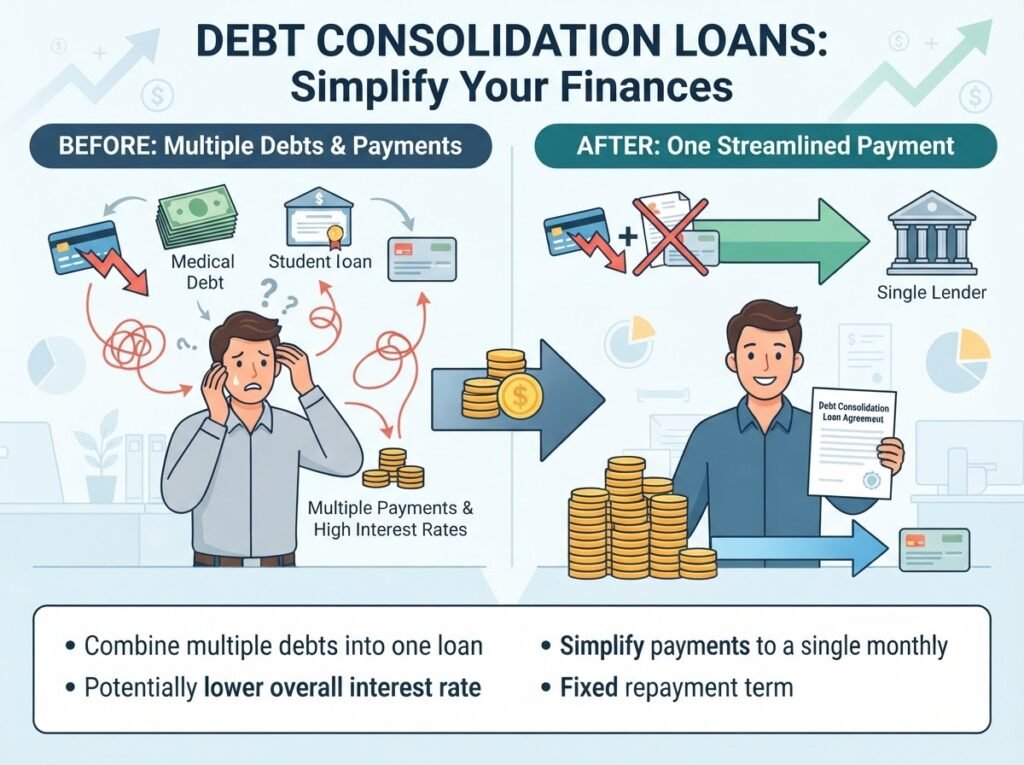
Debt consolidation loans are financial products designed to combine multiple debts into a single, manageable loan. This process simplifies the repayment schedule, potentially reducing the total interest paid over time and making it easier for borrowers to keep track of their payments. Essentially, borrowers take out a new loan to pay off various existing debts, such as credit card balances, personal loans, and medical bills.
Typically, debt consolidation is most beneficial for individuals struggling with high-interest debts. By consolidating these debts, borrowers can potentially secure a lower interest rate on the new loan compared to the rates charged by their original creditors. This reduction can lead to substantial savings, which can be especially advantageous for those who find themselves overwhelmed by multiple payments due at different times of the month.
Debt consolidation loans can be secured or unsecured. Secured loans are backed by collateral, such as a home or vehicle, which can lower the interest rate but comes with the risk of losing the collateral if payments are missed. Conversely, unsecured loans do not require collateral but typically come with higher interest rates. Choosing the right type of loan depends on the borrower’s financial situation and creditworthiness.
Real-life examples can illustrate how debt consolidation works for many individuals. For instance, a person with $15,000 in credit card debt with an average interest rate of 20% might consolidate this debt with a loan at a rate of 10%. By doing so, they not only simplify their payments but also reduce their overall interest costs, resulting in significant savings over time.
Overall, debt consolidation can be a beneficial solution for individuals looking to regain control of their financial situation, provided they understand the terms and have a plan in place to avoid accumulating new debt after consolidation.
The Process of Obtaining a Debt Consolidation Loan
Obtaining a debt consolidation loan involves several critical steps that require careful consideration and preparation. The first step is to prepare your financial documentation. This includes gathering personal information such as your income, employment history, outstanding debts, and monthly expenses. Lenders will require this information to assess your financial situation accurately and understand your ability to repay the loan.
Once your documentation is in order, you should evaluate various loan offers. Research multiple lenders to compare interest rates, fees, repayment terms, and other conditions associated with the debt consolidation loans they provide. This evaluation is essential, as different lenders may offer varying terms that can significantly impact the total cost of your loan.
After selecting potential lenders, the next step involves submitting applications. Many lenders allow you to apply online, which simplifies the process. While applying, it is crucial to be honest and provide all necessary information to prevent delays in the approval process. Factors like your credit score will influence the lender’s decision, so understanding your credit position before applying is advisable.
The approval process usually entails a review of your application and documentation by the lender. They may request additional information to finalize their assessment, which can take a few days to weeks, depending on the lender. It is important to maintain communication with your selected lenders during this time to address any queries they may have.
When choosing the right lender, consider aspects such as reputation, customer service, and the overall experience of previous borrowers. Reading reviews and testimonials can provide insights into lenders’ practices. Additionally, before applying for a debt consolidation loan, consider your financial goals and ensure that you can comfortably manage the new repayment terms, which will ultimately help in making informed decisions.
Understanding the Costs Associated with Debt Consolidation
Debt consolidation loans can serve as effective tools for managing financial obligations, but it is crucial to comprehend the costs involved. One of the primary expenses associated with these loans is the interest rate. Interest rates can vary significantly based on several factors, including the borrower’s credit score and the specific loan terms. Typically, individuals with higher credit scores tend to qualify for lower interest rates, potentially saving them substantial amounts over the life of the loan.
In addition to interest rates, borrowers should also consider any fees that may be applied when securing a consolidation loan. Common fees include origination fees, which are charged by lenders for processing the loan, and late payment fees, which are incurred if payments are missed. Some lenders may also impose account maintenance fees, which can add to the overall cost of the loan.
Prepayment penalties represent another potential cost to be aware of when obtaining a debt consolidation loan. These penalties are charged if the borrower pays off their loan early, which can be especially concerning for those who may wish to pay down their debt more quickly. Understanding the terms and conditions regarding prepayment is essential, as this can affect the total payments made over time.
The variability of costs based on credit scores and loan terms is significant. A borrower with a solid credit history may find themselves with lower fees and better interest rates compared to someone with a less favorable credit score. Therefore, it is vital for borrowers to conduct thorough research and compare offers from different lenders. Evaluating these various costs and their implications is critical to making informed financial decisions regarding debt consolidation loans.
Benefits and Risks of Debt Consolidation Loans
Debt consolidation loans offer various benefits that can significantly improve an individual’s financial situation. One of the primary advantages is the simplification of payments. By consolidating multiple debts into a single loan, borrowers can streamline their payment process. Instead of managing several due dates and varying interest rates, individuals make one monthly payment, which can greatly assist in budgeting and maintaining financial discipline.
Additionally, debt consolidation loans may offer lower interest rates than those of existing debts, particularly if the borrower’s credit score has improved since the time the debts were incurred. Reduced interest rates can lead to substantial savings over time, allowing individuals to pay off their balances more efficiently. Many borrowers find that with a lower interest rate, they can also pay down their principal more quickly, thus reducing the overall financial burden.
However, it is essential to consider the risks associated with debt consolidation. One significant concern is the possibility of accruing more debt. If individuals do not change their spending habits after consolidating their loans, they may find themselves in a similar or worse financial situation in the future. Without discipline, the temptation may be to continue utilizing credit, which can lead to a cycle of debt.
Another critical factor to consider is the potential impact on credit scores. Although consolidating debt can improve credit scores in the long run by reducing overall credit utilization, it may initially lead to a decrease as new inquiries and account openings are reported. Understanding these dynamics is crucial for borrowers as they navigate their financial choices. Overall, when making informed decisions regarding debt consolidation, individuals must weigh both the advantages and risks to ascertain if this approach aligns with their long-term financial goals.