Introduction to Home Refinancing
Home refinancing refers to the process of obtaining a new mortgage loan to replace an existing one. This financial strategy is primarily utilized for several purposes, including securing a lower interest rate, reducing monthly mortgage payments, or accessing home equity. By refinancing, homeowners can potentially save significant amounts of money over the duration of their loan, enabling them to not only manage their current financial obligations more effectively but also invest in other areas of their lives.
One of the key motivations behind refinancing is the opportunity to obtain a lower interest rate. Mortgage rates fluctuate due to various economic factors, and a decrease in rates can prompt homeowners to refinance. By securing a better rate, individuals may experience reduced monthly payments, which can ease their financial burden and allow them to allocate funds toward other essential needs or savings.
Additionally, refinancing provides homeowners the chance to tap into their home equity. Home equity is the difference between the market value of a home and the outstanding mortgage balance. By refinancing to extract equity, homeowners can use these funds for significant expenses, such as home renovations, education, or debt consolidation. This financial maneuver transforms a portion of the home’s value into usable cash, presenting a valuable opportunity for many.
Moreover, refinancing can enhance the overall financial structure of a household. Whether switching from an adjustable-rate mortgage (ARM) to a fixed-rate mortgage or consolidating various loans into a single mortgage, these adjustments can stabilize payments and simplify monthly budgeting. Homeowners should consider their long-term goals and the advantages that refinancing can offer in alignment with those plans.
In conclusion, understanding home refinancing opens up various opportunities for homeowners to either lower their costs or leverage their assets effectively. It is essential to consider these options and the potential impacts thoroughly before deciding to refinance.
Types of Home Refinance Options
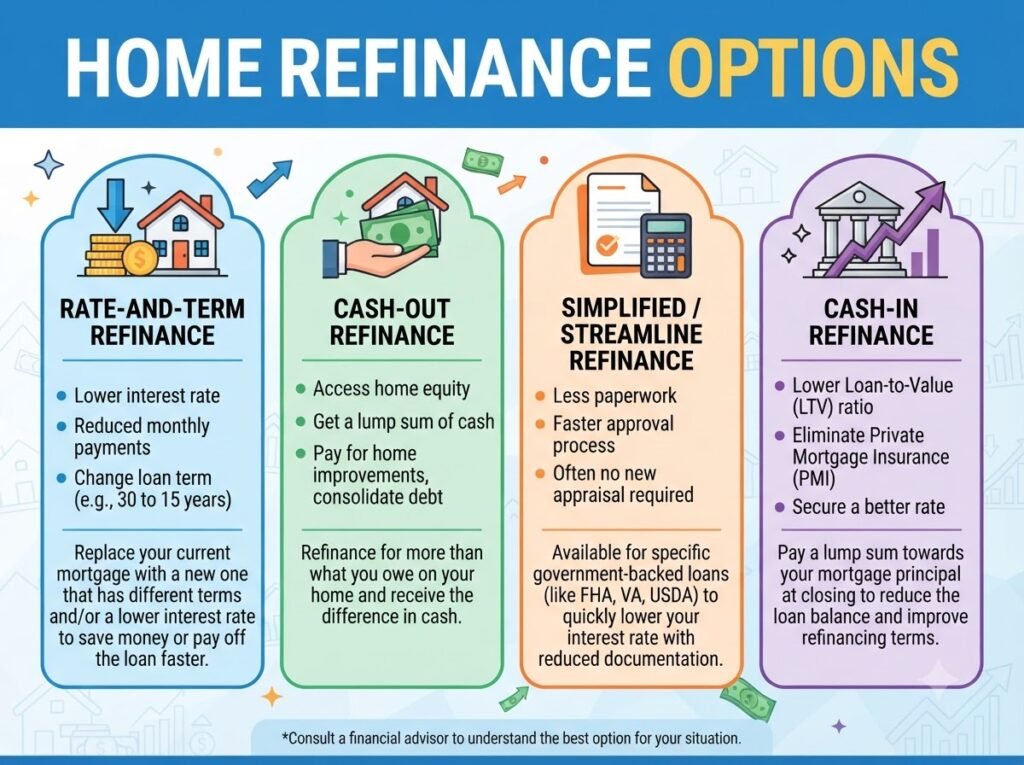
Home refinancing is a critical financial decision for homeowners looking to modify their mortgage agreements. Understanding the different types of refinance options can greatly influence a homeowner’s financial trajectory. The three primary categories of home refinance options include rate-and-term refinancing, cash-out refinancing, and no-cost refinancing.
Rate-and-term refinancing involves altering the interest rate and/or the duration of a loan without extracting equity from the home. This option is typically sought when homeowners wish to lower their monthly payments or switch from an adjustable-rate mortgage (ARM) to a fixed-rate mortgage. By securing lower interest rates, homeowners can significantly reduce their overall loan costs, leading to better financial stability.
Cash-out refinancing allows homeowners to tap into their home equity, enabling them to receive cash while taking on a new mortgage. This type of refinancing is beneficial for homeowners who need funds for significant expenses, such as home renovations or debt consolidation. However, it’s crucial to note that this option increases the total amount owed on the mortgage, making it imperative to assess the financial implications carefully.
No-cost refinancing is another alternative that minimizes upfront costs by charging a slightly higher interest rate. This option is ideal for those who do not plan to remain in their homes for an extended period, as it reduces immediate expenses associated with refinancing. Homeowners opting for this route may find it advantageous when swift adjustments are needed without the burden of initial fees.
In conclusion, each type of home refinance option offers unique benefits and considerations. Homeowners must evaluate their financial circumstances and long-term goals when selecting the most appropriate refinancing strategy. Understanding these options ensures that they make informed decisions that align with their financial well-being.
Understanding Rates in Home Refinancing
The interest rates associated with home refinancing are influenced by several key factors that potential borrowers should consider. One of the most significant elements is the borrower’s credit score. A higher credit score typically correlates with lower interest rates, as lenders view these borrowers as less risky. To secure the most favorable terms, it is advisable for homeowners to review and improve their credit scores before initiating the refinancing process.
Another critical factor is the loan-to-value (LTV) ratio. This ratio compares the loan amount with the appraised value of the property. A lower LTV ratio enhances a borrower’s position, often leading to more competitive interest rates. Lenders generally prefer borrowers with LTV ratios below 80%, as this indicates a substantial equity position in the property, which reduces risk.
Additionally, prevailing market conditions play a crucial role in determining refinancing rates. Economic indicators, such as inflation rates and the overall health of the housing market, can lead to fluctuations in interest rates. Staying informed about these trends can empower homeowners to time their refinancing decisions effectively, potentially leading to significant savings.
Borrowers can take several proactive steps to secure better interest rates when refinancing. Shopping around and comparing offers from different lenders is essential; even marginal differences in rates can translate into substantial savings over the life of the loan. Consideration should also be given to the type of loan—fixed or adjustable rate—as each offers distinct advantages and risks. Consulting with mortgage brokers or financial advisors can provide valuable insights tailored to individual financial circumstances.
In conclusion, understanding the factors influencing home refinancing rates is crucial for homeowners seeking to reduce their mortgage costs. By focusing on their credit scores, maintaining a favorable loan-to-value ratio, and keeping abreast of market conditions, borrowers can improve their chances of obtaining the best possible refinancing terms.
Fees Associated with Refinancing and How to Manage Them
Refinancing a home can be a strategic financial decision, but it often comes with various fees that borrowers should understand before proceeding. These fees can significantly affect the overall cost of refinancing and should be carefully considered in the decision-making process. Common fees associated with home refinancing include origination fees, appraisal fees, and closing costs.
The origination fee is the charge lenders impose for processing a new loan application. Typically expressed as a percentage of the loan amount, this fee can vary significantly among lenders. It is crucial for borrowers to inquire about this fee early in the refinancing process, as it can impact the overall savings from lowering the mortgage interest rate.
Appraisal fees also play a significant role in the refinancing process. An appraisal is necessary to determine the current market value of the property, which helps lenders assess the level of risk involved in offering a new loan. The cost of the appraisal can range widely based on location and the size of the property. Homeowners should prepare for this expense and, if possible, compare fees from different providers.
Another essential consideration is the closing costs, which encompass several fees associated with finalizing the mortgage transaction. These costs may include title insurance, legal fees, and recording fees, among others. On average, closing costs can range from 2% to 5% of the loan amount, making them a notable factor in the refinancing process.
To effectively manage these fees, homeowners can adopt several strategies. First, it is advisable to shop around and obtain quotes from multiple lenders. This not only helps in finding competitive rates but also allows borrowers to identify differences in fees. Additionally, homeowners should negotiate the costs wherever feasible. Some lenders might be willing to waive certain fees or provide discounts based on prior relationships or competitive offers.
In conclusion, understanding the various fees associated with home refinancing—such as origination fees, appraisal fees, and closing costs—is essential for homeowners. By actively managing these expenses, including shopping for better rates and negotiating costs with lenders, borrowers can make refinancing a financially sound decision.